
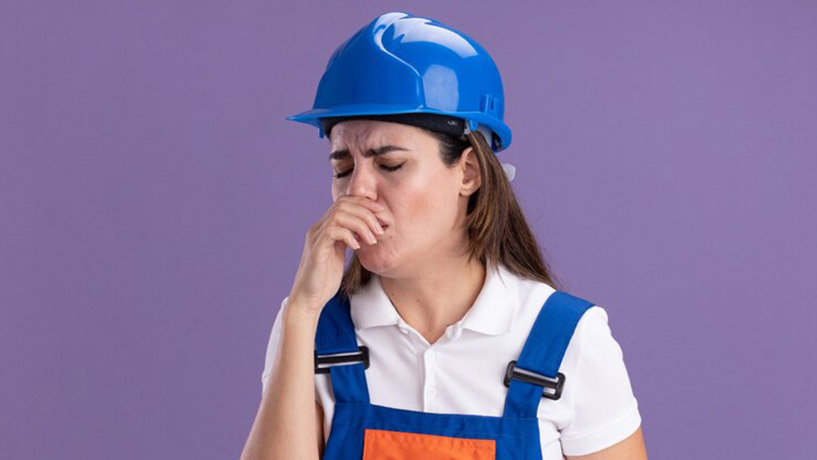
Occupational allergy is quite common nowadays. Sometimes employers do not comply with standards, and sometimes processes are not automated, so dusty work has to be performed by people.
Often employees may simply sneeze and cough at the workplace, but sometimes this develops into more serious conditions (asthma, dermatitis, eczema, etc.). However, occupational allergy can be diagnosed and treated quite effectively. The key is to seek timely care at the medical center “Alternative”.
Workplace allergens
An allergy in a person can be triggered by any substance that evaporates or is inhaled.
Occupational allergies most often occur in people who work in:
- pharmaceutical industry
- ceramic factories
- concrete plants
- pharmacy workers
- fur production facilities
- premises with high temperatures
That is, a person may be sensitive to various substances they encounter at the workplace.
Symptoms of occupational allergy
- urticaria
- bronchial asthma
- skin rash
- itching
- skin redness
- conjunctivitis
- swelling of the nasal mucosa
- headache
The mildest forms of occupational allergy are occasional sneezing and coughing, which do not significantly interfere with work, but they should already serve as warning signs that something is not right in the body.
Treatment of occupational allergy at the Medical Center “Alternative”
In occupational allergy, the prognosis for recovery is quite favorable. With timely consultation with an allergist, removal of harmful substances, and effective treatment, no trace of the allergy will remain.
Our medical center uses the following methods for treating occupational allergy:
- Blood tests and a comprehensive analysis of the entire body using the Medical Expert Complex. This helps the doctor determine possible allergens. Only after diagnosis will the doctor select an individual treatment plan.
- Detoxification of the body from harmful substances. This course is the most important, as it helps cleanse the liver, kidneys, intestines, and lymphatic system. The immune system is freed from toxins accumulated from medications and household chemicals through this program.
- Ozone therapy. It helps cleanse the blood of toxins and allergens.
- Sanitation of the ear, throat, and nose with an oxygen-ozone mixture. It is performed to increase the resistance of these organs to occupational allergens.
Thanks to the above procedures, immunity is improved, liver function is enhanced, blood becomes less viscous, and toxins, bacteria, parasites, and allergens are eliminated from the body. For your convenience, treatment can be carried out either inpatient or outpatient.