
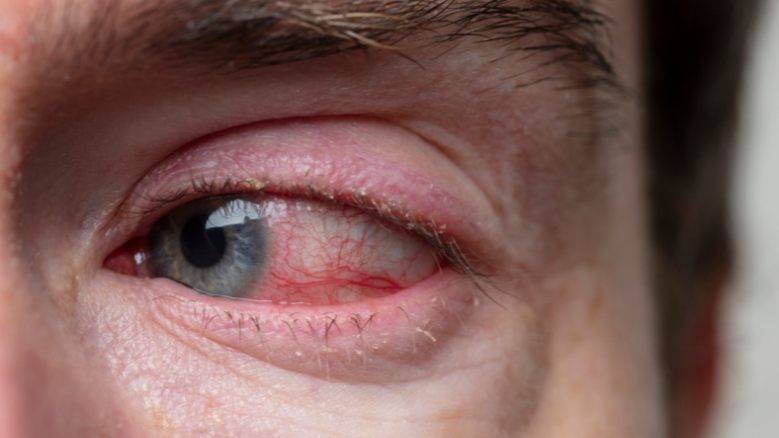
Allergic conjunctivitis – is a condition of pathological inflammatory changes in the superficial membrane around the eyeball and on the inner surface of the eyelids, which is called the conjunctiva.
Allergic conjunctivitis occurs in people together with Allergic rhinitis and is rarely an independent pathology.
At the same time, it is important to clearly understand that the nasopharynx and eyes are connected with the gastrointestinal tract.
If after night sleep you have a large amount of mucus discharge from the nose or even a cough, you should know that you need to be examined for helminthic infestations, as well as for the presence of viruses, fungi, and bacteria in the body.
Symptoms of allergic conjunctivitis
With this disease, a person is troubled by itching, tearing, burning, a “sensation of sand in the eyes,” redness of the eyes and the area around them, swelling of the eyelids and conjunctiva. Purulent discharge from the eyes may appear if a bacterial flora is added. In most cases, allergic conjunctivitis develops in parallel with allergic rhinitis with itching, sneezing, nasal discharge, redness, and swelling of the nose and the surrounding area. In this case, the diagnosis is called “allergic rhinoconjunctivitis.” These sensations often resemble flu and acute respiratory viral infections (ARVI), which is why another term is used – “hay fever.”
Since an allergic reaction always involves blood vessels, we observe redness of the eyes.
Causes of allergic conjunctivitis
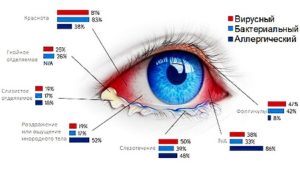
There are many causes of allergic conjunctivitis: plant pollen, animal hair and dander, food allergens, household allergens, chemically and environmentally harmful substances, and medications.
Seasonal causes – pollen during the flowering of trees, shrubs, grasses, weeds, flowers, etc., at certain times of the year.
The most commonly observed are allergic reactions in spring during the early flowering of trees: birch, alder, hornbeam, and many others; poplar during spring and summer flowering; roses in the summer period. A real “scourge” is allergy to the flowering of grasses, ragweed, wormwood, quinoa, and other weeds. As a rule, the peak of these allergies occurs in late July, August, September, and October.
A diagnosis of allergic conjunctivitis can be made when the above symptoms are present on both sides and there is a clear link with exposure to an allergen.
Diagnosis of allergic conjunctivitis
In the treatment of allergic conjunctivitis, it is important to eliminate contact with the allergen, which is an almost impossible task due to the wide distribution of most allergens in the air, and the ineffectiveness of window screens, masks, and other protective measures.
If a person engages in self-treatment and uses pharmaceutical drugs with side effects while exceeding the recommended duration of use, they develop so-called dependence on them and medication-induced sensitization. As a result, their condition may progress into a chronic, year-round process.
At the Medical Center “ALTERNATIVA,” everything begins with a full comprehensive diagnosis.
- General clinical laboratory diagnostics
- Biochemical laboratory diagnostics
- Laboratory allergy diagnostics
- Molecular allergy diagnostics
- Ultrasound diagnostics
- Screening analysis of allergens on the Medical Expert Complex. The results of laboratory and instrumental methods are evaluated. Spectral diagnostics using the KME (Medical Expert Complex) allows not only the identification of external allergens, but also allergens related to internal problems in the patient’s body, namely fungal, bacterial, helminthic, and viral burden. After diagnosis and consultation with a doctor, an individual treatment plan will be developed and you will receive answers to your questions.
Treatment of allergic conjunctivitis
Based on the experience of the Medical Center “ALTERNATIVA,” a comprehensive approach to improving the health of the body is extremely important.
- course of cleansing the gastrointestinal tract in an inpatient or outpatient setting: colon cleansing, orthograde intestinal lavage, and duodenal drainage of the hepatobiliary system
- complete ozone therapy complex: ozonated water, ear and rectal administration of ozone-oxygen mixture in the required concentration, intravenous drip infusion of ozonated saline solution, and ozonated autologous blood – autohemotherapy
- fight against pathogenic flora using spectral correction on the Medical Expert Complex, information therapy
- phytotherapy: antiparasitic, choleretic, kidney teas, hepatoprotective herbal powders, antiparasitic suppositories, followed by restoration of impaired functions of organs and tissues.
As a result, we achieve the elimination of toxic substances, pathogenic worms and microbes from the body, restoration of the functions of the digestive organs, liver, and pancreas, and consequently, the disappearance of hyperreactivity of the immune system to irritants-allergens with a gradual reduction and complete elimination of symptoms of allergic conjunctivitis.