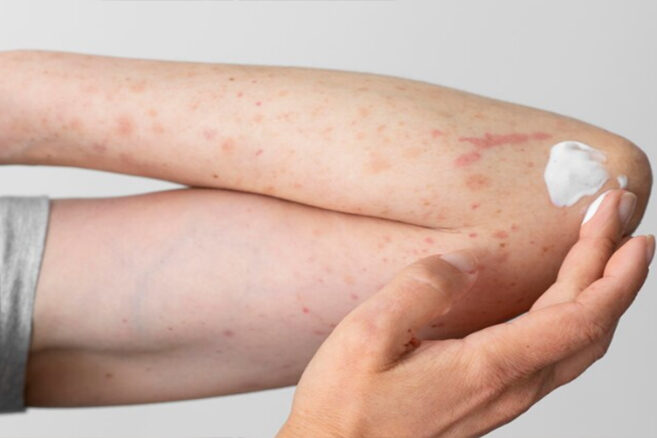
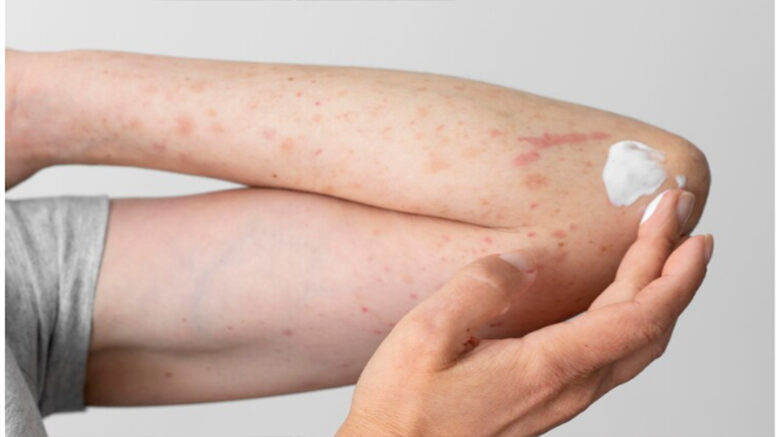
Allergic skin lesions are reactions that occur on the skin as a result of contact with substances that trigger an allergic response. Allergic skin lesions manifest through various symptoms, including redness, itching, swelling, dryness, burning, or the appearance of rashes.
Forms of allergic skin lesions
The most common forms of allergic skin lesions are contact dermatitis and allergic dermatitis.
Contact dermatitis
Contact dermatitis is a type of allergic reaction that occurs as a result of direct contact of the skin with a substance that causes an allergy. These may include various chemical substances such as metals (nickel), medications, cosmetics, plants (poison oak, poison ivy), latex, and others. Symptoms of contact dermatitis include itching, redness, blisters, peeling, and dry skin.
This is a more widespread allergic reaction that occurs both through direct contact with an allergen and through its direct effect on the skin. Examples of substances that cause allergic dermatitis include certain medications, cosmetic products, fragrances, plants, nickel, and other metals. Symptoms of allergic dermatitis include inflammation, redness, swelling, rash, blisters, and even ulcers.
To diagnose allergic skin lesions, various tests are usually performed, including patch tests, blood tests, and allergy tests.
Urticaria (hives)
is characterized by the appearance of itchy red patches on the skin of various shapes and sizes, similar to nettle stings.
Eczema (atopic dermatitis)
is an inflammatory skin condition that leads to itching, redness, peeling, and the formation of blisters.
Causes of allergic skin lesions
Allergic skin lesions are caused by various factors.
- Allergy-causing substances. Contact with substances to which a person has developed an allergy leads to allergic skin lesions. These may include chemical substances such as nickel, cobalt, latex, perfume components, dyes, preservatives, and others. Plants such as poison ivy or poison oak can also cause allergic contact dermatitis.
- Medications. Some people develop allergic reactions to certain medications. These may include antibiotics (for example, penicillins), anti-inflammatory drugs (for example, aspirin), allergy medications (for example, antihistamines), and others.
- Food allergens. In rare cases, certain food allergens cause allergic reactions that manifest on the skin. These may include products such as milk, eggs, wheat, nuts, seafood, and others.
- Hereditary predisposition. Some people have a genetic predisposition to allergic reactions, including allergic skin lesions. If parents have allergies, the risk of developing allergic reactions in children is higher.
- Environmental exposure. Environmental factors such as air pollution, chemical substances, household dust, and seasonal allergens (plant pollen) contribute to the development of allergic skin lesions in some people.
Connection between parasitic infestations and allergic skin lesions
There is a connection between parasitic infestations (infections caused by parasitic worms) and allergic skin lesions. Parasitic worms trigger immune responses in the body, which leads to the development of allergic symptoms on the skin.
One of the most well-known examples is the connection between infection with a parasitic mite called Demodex and rosacea (a chronic inflammatory skin condition of the face). Studies show that patients with rosacea often have an increased number of Demodex mites on facial skin.
Some parasitic worms, such as helminths, affect the immune system of the body. Their presence causes increased activation of the immune system and changes in circulating immune components, which leads to the development of allergic reactions, including allergic skin lesions.
Diagnosis of allergic skin lesions
Diagnosis of allergic skin lesions usually includes the following steps:
- Medical history and physical examination. The doctor conducts a detailed discussion of the patient’s medical history, including information about symptoms, possible allergens, and previous allergic reactions. A physical examination of the skin is then performed to assess symptoms and identify possible allergic reactions.
- Patch tests. This type of test is used to identify contact dermatitis caused by various substances. Small amounts of different allergens, such as metals, cosmetic products, medications, and plants, are applied to special patches and attached to the skin for several days. The doctor evaluates the skin’s reaction to determine which substances the patient is allergic to.
- Skin prick tests (scratch tests). In this type of test, small drops of different allergens are applied to the skin, and then small scratches or punctures are made on the surface of the skin. The doctor observes the skin’s reaction to determine which allergens trigger a response in the patient.
- Blood tests. Blood tests are performed to measure the level of IgE (immunoglobulin E) antibodies associated with allergic reactions. High levels of IgE indicate the presence of an allergic reaction to specific allergens.
Comprehensive treatment of allergic skin lesions at the Medical Center “Alternativa”
Comprehensive treatment of allergic skin lesions at the Medical Center “Alternativa” depends on the specific diagnosis, severity of symptoms, and individual needs of the patient.
Treatment of allergic skin lesions includes the following approaches:
- Avoidance of allergens. It is important to identify the allergens causing the skin reaction and avoid contact with them whenever possible. This includes changing hygiene products, using hypoallergenic cosmetics, and avoiding certain foods or materials.
- Topical treatment. The doctor prescribes topical medications to relieve symptoms of allergic skin lesions, such as anti-inflammatory creams or ointments, anti-itch remedies, or antiallergic ointments. These medications help reduce inflammation, itching, and skin redness.
- Systemic treatment. In some cases, when symptoms are severe or progressing, systemic treatment is required. This includes prescribing antihistamines to relieve itching and allergic reactions, anti-inflammatory drugs, or in cases of parasitic infestation, antiparasitic treatment methods.
- Consultation with a nutritionist. In cases where skin allergic reactions are related to food allergies, consultation with a nutritionist at the Medical Center “Alternativa” is recommended to develop an allergen-free diet.
- Comprehensive antiallergic program: body detoxification, ozone therapy, and lymphatic system cleansing.