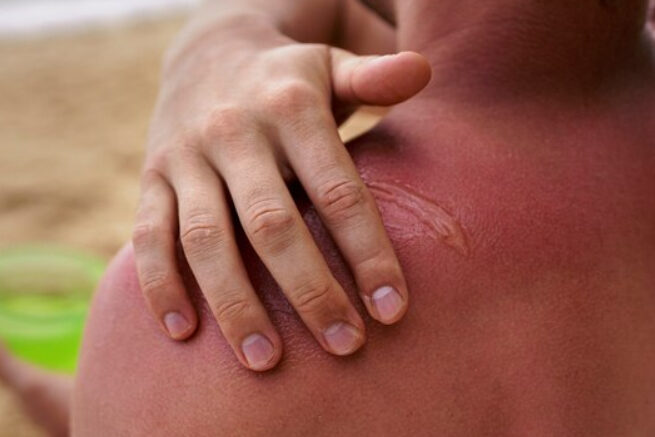
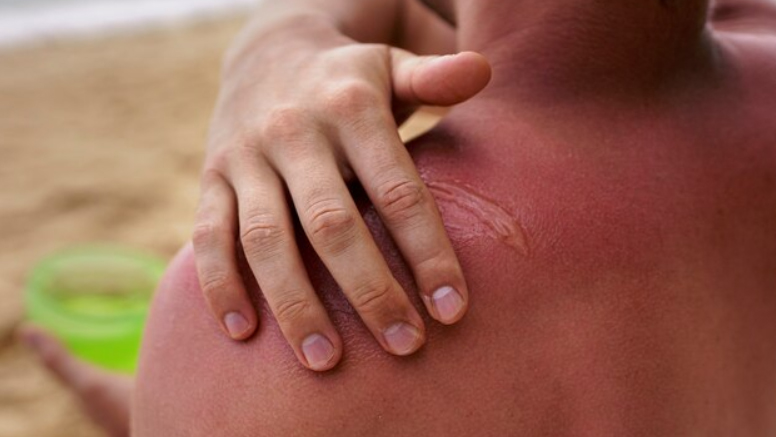
Allergic sun rash, also known as photodermatitis, is a skin reaction to exposure to sunlight. It appears as skin rashes, redness, itching, and irritation after exposure to the sun or ultraviolet radiation.
Causes of allergic sun rash
- An allergic sun rash can be triggered by several factors. One of them is photosensitivity, when the skin becomes sensitive to sunlight due to interactions with certain substances.
- Some medications, cosmetic products, and even certain foods can cause photosensitivity and contribute to the development of an allergic sun rash.
- An allergic sun rash may also be associated with an immune system reaction to ultraviolet radiation. In this case, the immune system reacts to sunlight and causes inflammation and skin irritation.
To prevent allergic sun rash, it is recommended to use sunscreen with a high level of UV protection, wear protective clothing, and avoid prolonged exposure to direct sunlight.
If you develop rashes or other symptoms after sun exposure, it is recommended to consult a doctor or dermatologist for evaluation and treatment and prevention guidance.
What does an allergic sun rash look like?
The appearance of the rash varies depending on the specific case, but here are some common symptoms:
- An allergic sun rash often appears as red patches or skin eruptions. The rashes may be small or large and are often accompanied by itching or burning sensations.
- Swelling of the skin in the affected areas. The skin looks puffy and reddened.
- Blisters filled with fluid or eczema-like rashes may form. This occurs as a result of more severe reactions to sunlight.
- One of the most common symptoms of an allergic sun rash is itching. The skin becomes very sensitive and itchy, causing discomfort.
- Rashes usually appear on areas of the skin most exposed to sunlight. They are often found on the face, neck, arms, and legs.
Complications of sun allergy
Sun allergy can cause various complications, especially if no measures are taken to protect against sunlight and control the body’s reaction.
Complications of photodermatitis:
- Sunburns. With sun allergy, the skin becomes more sensitive to ultraviolet (UV) radiation. This leads to more severe sunburns than in people without such allergy.
- Secondary infections. Constant scratching and rubbing of the skin caused by itching and rashes lead to irritation and skin damage. In this condition, bacterial or fungal infections may develop.
- Photoallergic contact dermatitis. With sun allergy, a photoallergic reaction may occur when the skin comes into contact with certain substances such as medications, cosmetic products, or sunscreens. This leads to inflammatory reactions and skin rashes.
- Psychological impact. Constant discomfort, itching, and inconvenience associated with sun allergy negatively affect a person’s psychological state. It can cause distress and limitations in daily life.
It is important to consult a doctor or dermatologist for an accurate diagnosis and an individualized treatment plan.
It is also recommended to take protective measures against the sun, such as using sunscreen with a high SPF, wearing protective clothing, and avoiding direct sunlight during peak UV hours.
Treatment of photodermatitis
- Outpatient or inpatient cleansing program lasting 5–10 days. Body cleansing helps eliminate toxins, restore metabolism, reduce weight, and improve the functioning of the intestines, liver, gallbladder, lymphatic, and circulatory systems.
- Diagnostics: abdominal ultrasound, laboratory tests, and body assessment using the Medical Expert Complex
- Detox program: accommodation; nutrition; herbal teas; massages; ozonated water; rectal insufflations of an ozone-oxygen mixture; ear canal insufflation with ozone-oxygen mixture; cleansing enemas; blind probing of the gallbladder and liver (duodenal drainage); cleansing of the small and large intestine (orthograde)
- Ozone therapy: intravenous administration, rectal insufflations, sanitation of the upper respiratory tract with ozone-oxygen mixture, intake of ozonated water, application of ozonated oil
- Antiparasitic programs
- Pressotherapy: lymphatic system cleansing
- Visceral therapy – internal organ massage helps normalize metabolic processes, reduce intestinal spasms, cleanse mucus and parasites, reduce visceral fat, and activate the liver, gallbladder, and pelvic organs
- Spinal traction using the “ORMED Professional” device
- Photon therapy
- Duodenal gallbladder probing
Ozonated oil for sun allergy
Ozonated oil is oil that has been treated with an ozone-oxygen mixture. It is known for its anti-inflammatory and antimicrobial properties.
Ozonated oil is used as an additional remedy for sun allergy to relieve symptoms and speed up skin healing.
It has unique properties due to the ozonation process, which involves treating plant oil with an ozone-oxygen mixture.
Key properties of ozonated oil:
- Antiseptic effect. Ozonated oil has strong antiseptic properties, making it effective against bacteria, viruses, and fungi on the skin.
- Anti-inflammatory effect. It helps reduce inflammation and skin irritation by lowering cytokines responsible for inflammatory processes.
- Accelerated healing. It promotes faster healing of wounds, abrasions, burns, and other skin damage. It stimulates skin regeneration, improves blood circulation, and oxygenates the skin.
- Moisturizing effect. It helps hydrate and soften the skin, making it smoother and more elastic.
- Antioxidant effect. It contains antioxidants that help protect the skin from free radicals and prevent premature aging.
Ozonated oil is used to treat various skin conditions such as burns, wounds, eczema, acne, and psoriasis, as well as for general skin care.
It is an additional treatment method for sun allergy and should be used only after consultation with a physician at the “Alternativa” medical center and in combination with other recommended therapies.